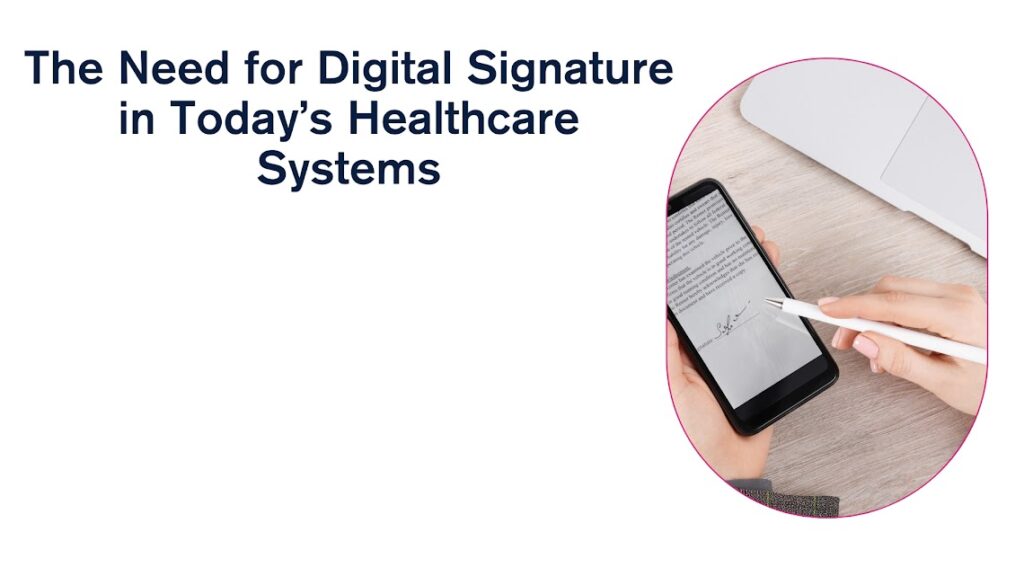

As healthcare systems rapidly evolve in the digital era, technology has become central to improving service delivery, data security, and patient accessibility. One technology gaining critical importance is the digital signature. From managing medical records to ensuring regulatory compliance, digital signatures are transforming how healthcare organizations operate.
This article explores the growing importance of digital signatures in healthcare, their practical use cases, the benefits they offer, and the challenges providers may face while implementing them.
Understanding Digital Signatures
A digital signature is a secure electronic method used to verify the authenticity and integrity of digital documents and transactions. It functions as the electronic equivalent of a handwritten signature but offers far greater security. Built on asymmetric cryptography, digital signatures ensure that the signer’s identity is verified and that any alteration to the document after signing is immediately detectable.
In healthcare, where confidentiality, accuracy, and timely decision-making are crucial, digital signatures offer a reliable and legally valid solution.
Factors Driving Digital Signature Adoption in Healthcare
Several developments have accelerated the adoption of digital signatures across healthcare organizations, especially as the industry shifts from paper-based systems to digital workflows.
1. Growing Demand for Secure Patient Data Handling
Medical records contain highly sensitive information, making data protection a top priority. With the widespread use of Electronic Health Records (EHRs), healthcare professionals need secure ways to authenticate and manage patient information. Digital signatures ensure that only authorized personnel can access or modify medical records, safeguarding data integrity.
Compliance with data protection regulations such as HIPAA and similar global frameworks requires strict control over patient information. Digital signatures help meet these requirements by preventing unauthorized access and data manipulation.
2. Expansion of Telemedicine Services
The rise of telemedicine—accelerated by the COVID-19 pandemic—has reshaped healthcare delivery. Digital signatures enable doctors to securely sign prescriptions, consent forms, and medical documents during remote consultations. This ensures that virtual healthcare services remain legally valid and compliant with regulatory standards.
3. Regulatory and Legal Compliance
Healthcare providers must adhere to numerous regulations governing documentation, privacy, and data security. Digital signatures support compliance by maintaining document integrity and generating audit trails that demonstrate accountability and regulatory adherence.
4. Need for Operational Efficiency
Hospitals and clinics handle large volumes of paperwork daily. Digitizing these processes using digital signatures reduces administrative workload, minimizes delays, and improves workflow efficiency—allowing healthcare professionals to focus more on patient care.
Key Uses of Digital Signatures in Healthcare
Digital signatures are applied across multiple healthcare functions, enhancing security and efficiency.
a. Electronic Health Records (EHRs)
Digital signatures authenticate medical records and ensure that patient data remains unchanged and accurate. This helps prevent errors, fraud, and unauthorized modifications that could compromise patient safety.
b. Electronic Prescriptions
In e-prescribing systems, digital signatures verify the authenticity of prescriptions sent to pharmacies. This reduces prescription fraud, prevents misuse of controlled substances, and improves patient safety.
c. Patient Consent Forms
Obtaining informed consent is a legal and ethical necessity. Digital signatures make it possible for patients to sign consent forms electronically—whether for procedures, treatments, clinical trials, or data sharing—ensuring legality while enabling remote access and record tracking.
d. Medical Billing and Insurance Documentation
Billing forms and insurance claims require precise authentication. Digital signatures allow healthcare providers to submit these documents electronically, reducing paperwork, processing time, and errors while maintaining legal validity.
e. Secure Sharing of Medical Records
When patient records need to be shared between hospitals, specialists, or laboratories, digital signatures ensure that data is authentic, unchanged, and transmitted securely—supporting coordinated and timely patient care.
f. Telemedicine Documentation
Virtual consultations require digitally signed records, prescriptions, and reports. Digital signatures enable healthcare professionals to complete documentation remotely without compromising legal standards.
Advantages of Using Digital Signatures in Healthcare
1. Stronger Data Security
Digital signatures rely on cryptographic keys that ensure only authorized individuals can sign documents. This significantly reduces the risk of data breaches, fraud, and unauthorized access.
Audit trails further enhance accountability by recording who signed a document and when.
2. Faster and More Efficient Processes
By eliminating manual paperwork and in-person signing, digital signatures speed up administrative tasks, reduce delays, and improve internal coordination across departments.
3. Cost Reduction
Healthcare organizations save on printing, storage, and document handling costs. Digital workflows also reduce staff time spent on administrative tasks, improving overall productivity.
4. Simplified Regulatory Compliance
Digital signatures help healthcare providers maintain accurate and secure records that meet regulatory standards, including data privacy and documentation requirements.
5. Reduced Errors and Fraud
Automated verification minimizes human errors such as missing signatures or misplaced documents. Digital signatures also prevent impersonation and document tampering.
Challenges in Adopting Digital Signatures
Despite their advantages, implementation can present certain challenges:
a. System Integration
Integrating digital signature solutions with existing EHR systems and healthcare software requires careful planning to avoid disruptions.
b. Staff Adoption
Healthcare professionals may initially resist new technologies. Proper training and awareness programs are essential to encourage adoption.
c. Legal and Compliance Alignment
Healthcare providers must ensure that digital signature solutions comply with applicable laws and standards in their region.
d. Building Patient Confidence
Patients unfamiliar with digital signatures may worry about security. Educating patients about safety measures helps build trust.
How to Apply for a Digital Signature Online
Step 1: Visit the Official Website
Access the authorized platform to begin the application.
Step 2: Enter Required Details
Select user type (individual or organization), certificate purpose, validity period, and provide personal information.
Step 3: Choose USB Token Option
Indicate whether you already have a USB token or require a new one.
Step 4: Make Payment
Complete payment using available online methods.
Step 5: Review and Submit
Verify all details and submit your application.
Step 6: Receive Your Digital Signature
After verification, your digital signature will be issued on a secure USB token.
Suggested read:- Digital Signature Certificate for Income Tax
Conclusion
The role of digital signatures in healthcare continues to expand as organizations embrace digital transformation. By enabling secure documentation, regulatory compliance, and efficient workflows, digital signatures have become an indispensable tool for modern healthcare providers.
Although challenges such as integration and adoption exist, the long-term benefits—enhanced security, reduced costs, improved efficiency, and better patient care—far outweigh these hurdles. As healthcare increasingly relies on digital systems, digital signatures will remain a cornerstone of secure and trustworthy healthcare operations.