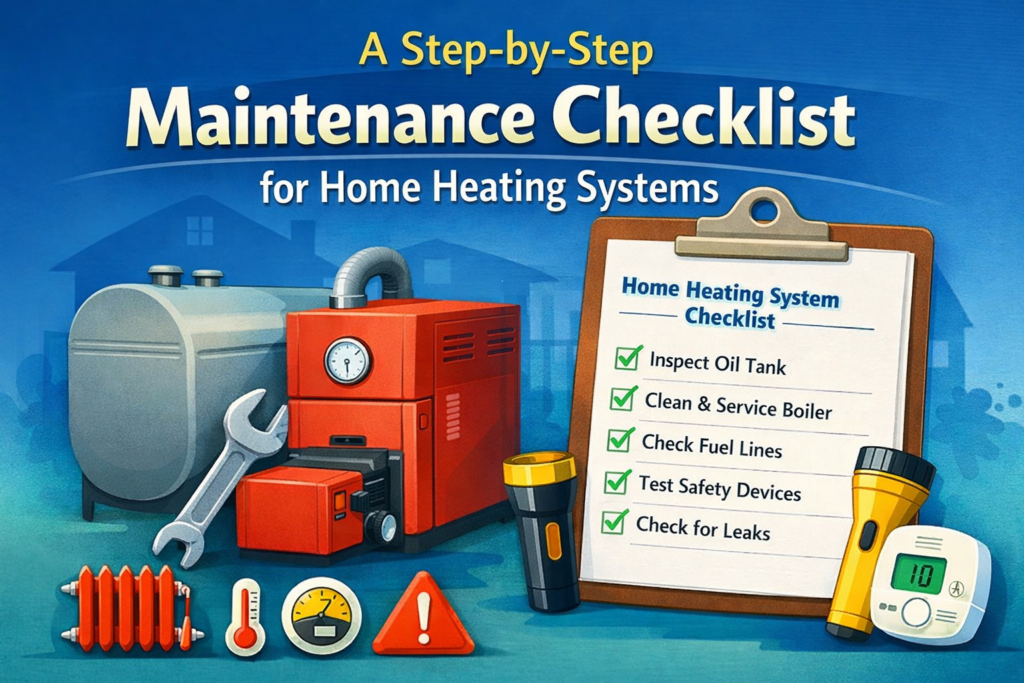

The regular maintenance of the home heating system you have is very important for making sure that it is giving reliable and efficient work, especially in the months of winter.
A well-managed system of heating oil not only gives a constant level of warmth but also helps to reduce the consumption of energy.
This process can help you to get the prolonged lifespan of the heating system you are having and ensure the safety of your home.
If you want to keep the heating system you have in a well-managed condition, in this article you will find the step-by-step maintenance checklist.
The Importance of Heating System Maintenance
The heating oil system you have in your home should have the proper level of maintenance. This is added to the efficiency, improved level of air quality inside the home, and concerns of safety.
Efficiency: Efficiency refers to the capacity to align a task with a minimal level of wastage of time, resources, and effort. In this process of the heating system, efficiency is crucial for checking the usage of energy and reducing the cost of operations.
Prevention of system failure: Preventing the failure of the heating oil systems is done by regular maintenance and doing repairs on time.
Improved level of air quality inside the home: You can keep and improve the air quality inside the home by controlling the humidity and cleaning the boilers regularly for effective home heating.
Safety: The heating oil system helps you to stay aware of the temperature around you and secure the indoor air quality.
Extended lifespan of the boiler: For the extended lifespan of the boiler you should make the scheduling of the proper maintenance by cleaning and replacing the filters of the home heating system.
Saving of cost: To save the cost of the heating oil boiler you should cheque the maintenance and modify the tanks and pipes. You should work on upgrading to a high-efficiency model.
Having comfort: Your heating oil should give you a high level of comfort inside the home, especially in the colder weather.
Environmental concerns: Heating oil systems and boilers should be checked to minimise the negative effects of the boiler on the environment. Like the release of CO2 or carbon dioxide and NOx or nitrogen oxides and sulphur dioxide.
Signs of a Furnace Malfunction
The signs of furnace malfunction are added with strange noise, lack of heat, and unusual odour in the home heating system. This can be a sign of damage inside the furnace.
Reduced efficiency of heating: An unmanaged boiler can have the experience of reduced heating efficiency due to issues like ageing components, improper levels of combustion, and dirt build-ups in the heating oil system.
Unusual noises: The furnace that is not maintained and serviced well can have unusual noises.
Strange odour: They can also release strange levels of odours.
Frequent cycling: Frequent cycling means that the boiler needs the turn on and turn off frequently and this happens within a very short period.
Increase in energy bills: An increase in the bills of energy shows that the boiler is not working well. This happens due to the lack of maintenance for the systems of home heating.
Unreliable performance: The unreliable performance of the boiler can lead to frequent failures and inconsistency in the level of heating.
Safety hazards: This is added to monoxide emissions, gas leaks, and hazards of fire.
Components of the Oil Furnace That Need Maintenance
The components of the oil furnace that need frequent maintenance are added with the burner, fuel filter, and heat exchangers.
Fired furnace burner assembly: The fired furnace burner assembly is added with the burner itself, the fuel delivery mechanism, and the sensors for the flames.
Fired furnace heat exchange: The fired furnace heat exchanger is also a very important component and this works for the transferring of the heating by the combustion process to the air for the home heating system.
Blower motor: This is the main component of the oil furnace. This works for air circulation inside the home. This is done by the duct works. There is a need for regular maintenance for this.
Ignition system: This is responsible for the oil furnace and works for the ignition of the fuel oil. It has components like transformers, electrodes, etc.
Heating System Maintenance Checklist
The heating system maintenance is done by checking the thermostats, checking the electrical components, cleaning the assembly of the burners, etc.
Checking the air filters: Checking the air filters is aligned with the checking of dust, dirt, and any kind of debris build-ups.
Inspecting the Thermostat: Checking the thermostats is added with the checking of the settings, ensuring the accurate level of reading of temperature, and making changes wherever needed in the heating oil system.
Cleaning the vents: Cleaning the vents is aligned with the removal of debris, dust, and any other obstructions from the vents.
Cleaning the ducts: The cleaning of the ducts in home heating entails removing the contaminants from the ducts and improving the air quality inside the home.
Checking the electrical connection: Checking the electrical connections is the process of checking the wires and terminals inside the boilers.
Verifying the clean blower motor: Verifying the cleanliness of the blower motor is added with its inspection for any kind of dirt, debris, and dust.
Taking the advice of the professionals: You should take the advice of the professionals who take care of the servicing of your home heating systems.
Performing a Carbon Monoxide Test: This is added with the use of the detectors for checking the existence of carbon monoxide in your heating oil system.
Reassembling and Restoring the blower: Restoring and reassembling the blower is added by putting back together the parts of the blower motor and making sure about the proper function and alignment.
Key Tasks to Prepare Your Oil Furnace For Winter
The key tasks of preparing your oil furnace in winter are added with checking the thermostats, checking the levels of fuel, testing the controls of safety, and scheduling professional levels of maintenance.
- You should regularly verify, clean, and replace the air filters of your heating oil system.
- Always keep air vents open and clean.
- For a gas system, clean and verify the pilot light with a small wire brush.
- If the heating system is an oil system, flush it.
- Keep working on the general maintenance process.
- Work on condensate removal and disposal of the systems.
9 steps to increase the performance of the oil furnace
For increasing the performance of the furnace there is a need to clean and replace the filters regularly. There is also a need to change the duct work and improve the insulation of the home heating.
Step 1: Insulate and seal the duct work
Insulating and sealing the ductwork is added with wrapping the ducts in the insulation and making seals on any kind of leaks with foil tape for having a good home heating process.
Step 2: Optimise the Thermostat Settings
Optimising the setting of the thermostat is added with the programming of the temperature and energy efficiency. This is also added with using the programmable and efficient thermostats for heating oil.
Step 3: Verify and Clean the Heat Exchanger
You should have a regular verification of the heat exchanger like checking for any leaks or corrosion inside it.
Step 4:Properly Insulate Your Home
This is added with insulation to walls, floors, and attics to reduce the loss of heat in the heating oil system. This gives special comfort in the months of winter.
Step 5: Maintain Your Chimney and Flue
This is done to cheque any blockage, damage, and/or any kind of debris.
Step 6: Bleed the Radiators in Hydronic Heating Systems
Bleeding the radiators in the hydronic system of heating is added with the release of the trapped air from the radiators to make sure about the distribution of heat.
Step 7: Check if there is any gas pressure or leakages
You also have to cheque if there is any gas pressure or gas leaks inside the boiler.
Step 8: Check if there is any corrosion
Cheque the fitting of pipes and heat exchanger for any kind of corrosion.
Step 9: Check the carbon monoxide detectors
Keep on checking the carbon monoxide detectors to find if they are working well or not.
Common Mistakes to be Avoided
Some of the common mistakes that are added with the care of a heating oil boiler are not following the rules of safety, improper level of installation, and ignoring the signs of warning.
Neglecting regular maintenance: Sometimes the users do not care to take regular care of the heating oil boiler and this can lead to safety hazards.
Ignoring warning signs: People may also ignore warning signs like unnatural odour, noise, etc in the systems of home heating.
Neglecting tank inspections: People can also avoid having regular inspections of the tank.
Improper quality of fuel: Sometimes users search for cheap levels of oil and thus, they avoid the good quality of oil to be used.
Improper burner adjustments: Improper adjustment of the burner can result in inefficient combustion and excessive levels of consumption of fuel.
Benefits of Regular Maintenance
Regular maintenance makes sure about effective levels of operations and this also reduces the chances of breakdown. This gives a prolonged lifespan of the equipment for effective home heating.
Improvement in energy efficiency: The improvement in energy efficiency refers to the decrease in the consumption of energy and managing the improvement in the performance of the system.
Long-term savings: This is coined as the financial benefits and cost reduction by doing regular checkups of the boiler of heating oil.
Enhanced lifespan: Regular maintenance enhances the lifespan of work of the boiler and reduces the cost of replacement.
Reduction in risk breakdowns: Checking and verifying each part working properly can reduce the risk of breakdown in the home heating system.
Improve safety: Taking good care of the boiler reduces the risk of hazards and improves machine safety.
Optimised performance: Regular checkups also increase the level of performance of the boiler.
Wrapping Up,
This is very much essential to have a regular check-up and maintenance of the heating oil boiler so that it can have safe work operations. You should always remember to schedule a professional level of maintenance to reduce the chances of hazards and system failure. Cheque the signs of danger always in the boiler of heating oil. You should try to keep your heating oil running smoothly.