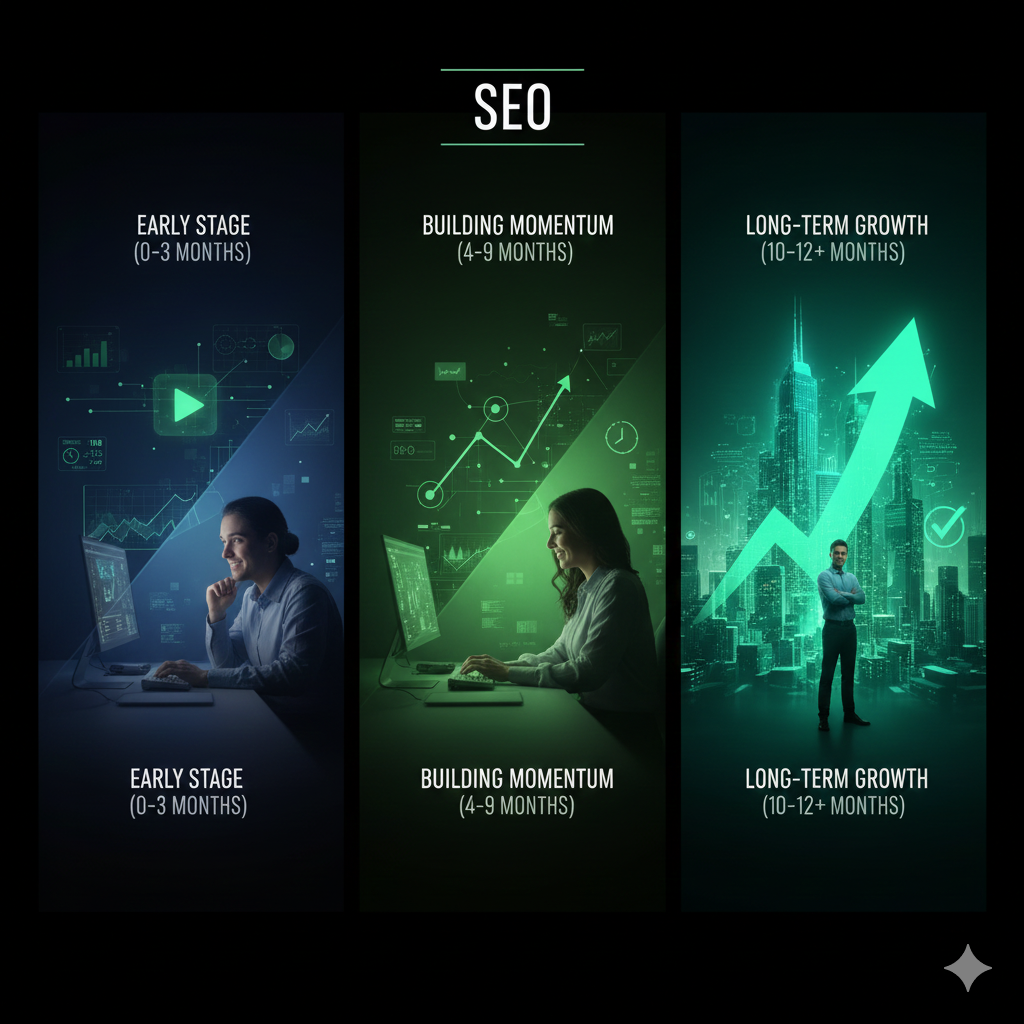

SEO typically takes three to six months to start showing results, though some sites may require six to 12 months depending on factors like competition and resources. The typical top-10 ranking page is around two years old, and pages ranking number one are almost three years old on average. This timeline frustrates businesses wanting immediate visibility, which explains why pay per click marketing services remain popular despite higher costs.
Understanding why SEO requires patience helps set realistic expectations and prevents abandoning strategies before they mature. According to 82% of experts surveyed, SEO takes 6 months to show an increase in traffic on average, while the full results of good SEO strategies are visible after 12 to 24 months. The experience and expertise that professional seo services for small business providers bring helps navigate this timeline effectively while avoiding costly mistakes that extend delays.
Why Does SEO Take So Long Compared to Paid Ads?
SEO takes time because search engine algorithms have become increasingly complex with more than 200 ranking factors to consider, and critical elements like building a strong backlink profile happen gradually. Unlike paid advertising that delivers traffic immediately after launching campaigns, SEO builds momentum through earning trust rather than purchasing visibility directly.
SEO is a gradual process because Google needs hours or weeks to find, crawl, and index new content, and implementing best practices across all pages must happen consistently over time to prove your site’s reputation. Search engines want to show users the most helpful and trustworthy results, which requires evaluating your site’s performance over extended periods rather than accepting your claims about quality.
The fundamental difference is that SEO creates assets providing value indefinitely while paid ads stop working the moment budgets end. This asset-building approach requires initial patience but delivers superior long-term economics compared to continuously funding advertising campaigns that provide no lasting benefits.
What Factors Influence How Quickly Results Appear?
Your SEO timeline depends on your website’s history with older sites having more indexing time, competition level in your industry, resources allocated to SEO efforts, your optimization strategy, and whether you avoid common pitfalls like frequently changing approaches. Each factor either accelerates or delays when meaningful improvements become visible in analytics.
Domain age affects ranking speed significantly. New websites often face a delay in gaining visibility, a phenomenon known as the Google Sandbox, an unofficial term for the period usually lasting 1 to 3 months during which new sites may not rank well. Established sites with existing authority typically see faster results from new content and optimization efforts.
Competition intensity determines difficulty earning rankings. Targeting keywords where major brands with massive budgets dominate requires substantially more time and resources than focusing on niche terms with manageable competition. Smart keyword selection matching your capabilities dramatically affects how quickly progress becomes visible.
What Happens During the First Three Months?
The first month focuses entirely on foundation building through technical audits, keyword research, and strategy development. You may not see ranking changes yet because this month is entirely about building a strong base through analytics setup, keyword research, competitor analysis, content strategy creation, and initial technical fixes. These preparations determine future success but produce no immediate visibility improvements.
Month two involves implementing technical optimizations and creating initial content. Search engines discover your changes and begin evaluating how improvements affect user experience. Some low-competition keywords might show early movement, but most competitive terms remain unchanged during this phase as Google tests your pages.
By month three, consistent publishing and optimization work starts generating early signals. Early traction appears with possible bounce in rankings as Google evaluates how well your content satisfies user intent. You might notice small increases in impressions and occasional clicks, though substantial traffic growth typically hasn’t materialized yet at this stage.
When Do Businesses Start Seeing Real Traffic Growth?
Most websites begin seeing SEO traction within 3 to 6 months, achieve steady growth by 6 to 12 months, and reach full potential after 12 months or more depending on competitiveness and consistency. Month five typically marks when consistent upward traffic trends become obvious rather than just occasional fluctuations in data.
Studies show that 70% of websites that consistently optimize for six months or longer experience a measurable rise in organic visibility. This data proves that sustained effort eventually produces results for most sites following sound strategies. The businesses that quit before six months never experience these gains from their initial investments.
Revenue impact typically lags traffic increases by additional weeks or months. Visitors need time exploring your site, building trust, and moving through purchase consideration before converting. Some businesses see conversions starting month six while others require eight to ten months depending on sales cycle complexity and average transaction values.
How Does Website History Affect Timeline Expectations?
Established websites with existing authority see faster results from new content and optimization efforts. Their accumulated trust signals help new pages gain visibility more quickly than identical content published on newer sites. This head start makes maintaining rankings easier than building them from scratch on fresh domains.
Brand-new websites face the longest timelines due to lacking any trust signals. Generally backlink impacts may not be immediate, taking as little as a few minutes or as long as some months for a backlink to get indexed by Google, while effects may not reflect in visibility until 3 to 12 months. Building initial authority requires patience as each quality signal compounds gradually over time.
Sites with existing traffic but poor optimization often see the fastest improvements. They already have domain authority and backlink profiles, so fixing technical problems and improving content quality produces visible results within shorter timeframes. These sites essentially unlock value that existing authority was unable to deliver previously.
What Results Should You Expect at Different Milestones?
Month four brings early traction with organic traffic starting its upward climb and possibly seeing first SEO-driven sales. Impressions increase noticeably in Search Console even if click-through rates remain low. Some pages begin appearing on page two or three for target keywords, indicating progress toward page one rankings.
By month six, organic traffic shows consistent upward momentum as pages gain authority, products start ranking for transactional keywords creating direct conversion opportunities, and Google may display your store in rich results. Many ecommerce sites hit their first consistent ROI from SEO at this stage with tangible increases in sales justifying initial investments.
At 12 months, many achieve their first top 10 rankings and experience more stable SEO results, especially with consistent content, backlinks, and strategic keyword approach. Traffic and conversions reach levels that significantly impact business operations. Rankings become more stable rather than fluctuating wildly, indicating established authority Google trusts and rewards consistently.
Why Do Highly Competitive Industries Take Longer?
Industries where major players invest millions in SEO require substantially more time and resources to compete effectively. When established brands with years of authority and thousands of backlinks dominate search results, overtaking them demands comprehensive strategies executed flawlessly over extended periods rather than standard six-month timelines.
Competition analysis reveals how much effort competitors invest maintaining their positions. If top-ranking sites publish multiple articles daily, maintain massive backlink profiles, and optimize extensively, matching their results requires similar commitment. Many businesses underestimate the investment required competing in crowded markets and abandon efforts prematurely.
Niche markets with limited competition show results much faster. Local businesses targeting geographic markets often see traction within three to four months. B2B companies serving specialized industries rank quickly for long-tail keywords that larger competitors ignore. Smart positioning in less competitive spaces accelerates timeline substantially.
How Does Content Quality Impact Speed of Results?
High-quality content attracts backlinks, which build domain authority, while strong technical foundation ensures content is indexed quickly and presented effectively to users. Each factor influences others creating compounding effects. Superior content accelerates every aspect of SEO by naturally attracting the signals search engines reward.
Thin or duplicate content extends timelines dramatically regardless of other optimization efforts. Search engines quickly identify low-value pages and deprioritize them in rankings. Businesses publishing generic content that rehashes existing information without adding unique value waste months before realizing their approach won’t succeed.
Comprehensive content demonstrating genuine expertise ranks faster and maintains positions more reliably. Articles thoroughly covering topics by addressing related subtopics, answering common questions, and providing original insights satisfy user intent better than surface-level pieces. This depth signals authority that algorithms reward with better visibility and sustained rankings.
What Role Do Backlinks Play in Timeline?
Building authority through backlinks takes time and effort because it involves creating great content that people naturally want to share and forming partnerships with other reputable sites. Quality backlinks remain one of Google’s top ranking factors, but earning them requires sustained effort rather than quick wins through shortcuts.
Acquiring high-quality backlinks from authoritative websites sets up robust backlink profiles, though impact may not be immediate with effects possibly not reflecting in site visibility until 3 to 12 months. Each quality link compounds authority gradually rather than providing instant ranking boosts that many businesses expect when link building begins.
Sites launching without backlink acquisition strategies extend their timelines unnecessarily. Even perfectly optimized content struggles ranking without external validation that backlinks provide. Businesses should begin outreach, relationship building, and content promotion immediately rather than waiting for organic links to appear magically over time.
Can You Accelerate SEO Results Without Compromising Quality?
Several strategies speed results without resorting to manipulative tactics that risk penalties. Targeting low-competition keywords delivers quicker wins while building authority for harder terms later. Low-difficulty keywords are search queries that are relatively easy to rank for, and targeting these rather than higher-difficulty keywords should show SEO results more quickly.
Content refreshing updates existing articles with new statistics, improved formatting, and additional sections. This strategy leverages pages with existing authority rather than starting fresh with new content. Updated pages often rank faster than brand new articles because they already have indexing history and possibly some backlink equity.
Technical optimization fixes that improve page speed, mobile usability, and crawlability can produce relatively quick improvements. Addressing technical barriers preventing search engines from properly accessing content sometimes unlocks visibility within weeks rather than months. These fundamental fixes should happen immediately rather than delaying them.
What Common Mistakes Extend SEO Timelines?
Expecting overnight success leads businesses to abandon strategies before they mature. Sometimes businesses don’t see results because they’re making critical mistakes like expecting overnight success, publishing thin or duplicate content, or inconsistently applying strategies. Patience remains essential because legitimate SEO simply requires time building the signals search engines evaluate when determining rankings.
Frequently changing approaches prevents any strategy from reaching maturity. Switching tactics every month means constantly restarting rather than building momentum. Successful SEO requires committing to sound strategies long enough for them to produce results rather than chasing whatever tactic seems promising this week.
Neglecting ongoing optimization after initial work stops progress completely. SEO isn’t a one-time project but continuous improvement process. Businesses that optimize once then stop publishing content, building links, and updating pages see rankings stagnate or decline as competitors maintain consistent effort pulling ahead in search results.
How Does Budget Affect Timeline Expectations?
The more time and money you invest in SEO, the quicker you can achieve results. Larger budgets support faster content creation, more aggressive link building, comprehensive technical improvements, and dedicated resources that accelerate every aspect of optimization. However, money alone doesn’t guarantee results without sound strategy and quality execution.
Small businesses with limited budgets should expect longer timelines but can still succeed through focused strategies. Targeting realistic keywords, creating genuinely helpful content, and building authority gradually within budget constraints eventually produces results. The key is consistent effort within available resources rather than sporadic expensive campaigns.
Resource allocation matters tremendously. Having tools, talent, and time determines execution speed and quality. Lacking any element extends timelines regardless of budget size. Smart resource allocation focusing on activities with highest impact accelerates results more effectively than spreading limited budgets too thin across too many initiatives.
What Should You Track to Monitor Progress?
Search Console impressions increase before clicks, providing early indicators that rankings improve. Growing impressions show your pages appearing in more searches even if they haven’t reached click-worthy positions yet. This leading indicator proves your optimization efforts are generating visibility that eventually converts to traffic.
Keyword position tracking reveals gradual climbing through search results. Moving from position 50 to 25 to 15 represents real progress even though traffic remains minimal. These incremental improvements predict future traffic growth as pages approach page one where most clicks concentrate.
Organic traffic and conversions represent ultimate success metrics. However, focusing exclusively on these lagging indicators creates frustration during early months when foundational work hasn’t produced visible traffic yet. Balanced tracking of leading and lagging indicators maintains realistic perspective throughout the timeline.
Making Peace with SEO Timelines
SEO takes time because you’re building credibility with both users and search engines through relevance, expertise, and authority. Unlike paid advertising where you purchase visibility, SEO earns rankings through demonstrated value. This fundamental difference explains why patience proves essential for success.
The payoff is that results grow over time and continue delivering value indefinitely. Content ranking well today drives traffic for years without additional investment. This compounding return makes SEO superior to paid advertising for long-term growth despite slower initial results requiring faith and persistence.
Whether handling optimization internally or partnering with professionals, understanding realistic timelines prevents disappointment and premature strategy abandonment. The experience and expertise specialists bring often accelerates results by avoiding common mistakes that extend delays. Focus on sustainable strategies building lasting authority rather than chasing shortcuts that waste time and risk penalties.