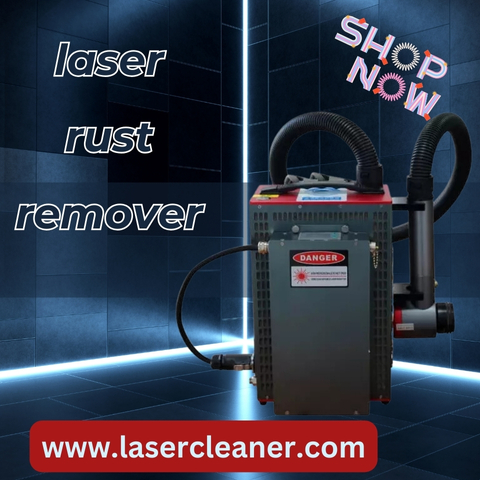

Rust is a common problem that affects metals over time, causing corrosion and deterioration. For decades, industries and individuals have sought reliable solutions to remove rust efficiently without damaging the underlying material. One of the most advanced and effective solutions available today is the laser rust remover, a cutting-edge technology that has transformed the way rust removal is approached across multiple sectors.
The laser rust remover utilizes highly concentrated light energy to interact directly with the rust layer on a metal surface. This process is precise, allowing the rust to be vaporized or disintegrated without impacting the metal beneath it. Unlike traditional rust removal techniques, such as chemical treatments, sandblasting, or manual scraping, laser rust removal offers a controlled, clean, and environmentally friendly approach to surface restoration.
Industries ranging from automotive and aerospace to manufacturing and shipbuilding have adopted laser rust removers for their ability to maintain the integrity of the metal while achieving exceptional cleanliness. Automotive restoration specialists, in particular, benefit from the precision of laser rust removal when dealing with classic cars, where preserving the original metal is critical. Shipbuilders and maintenance teams also rely on this technology to combat rust on large steel structures, ensuring both safety and longevity.
The technology behind a laser rust remover involves using a high-energy laser beam that is finely tuned to target iron oxides. As the laser passes over the corroded surface, it heats the rust rapidly, causing it to flake off or vaporize. This process leaves the underlying metal intact and ready for further treatment, such as painting or coating. Unlike chemical rust removers, which may leave residues or require extensive cleaning, the laser approach produces a surface that is clean, dry, and free from contaminants.
Precision is a hallmark of laser rust removal. The ability to focus the laser beam on specific areas allows operators to target even the smallest patches of corrosion without affecting surrounding areas. This makes it ideal for intricate components, machinery parts, and delicate metalwork that would be difficult or impossible to clean using traditional methods. Industries that manufacture precision instruments or intricate metal assemblies often rely on laser rust removers for this reason.
Another important aspect of the laser rust remover is its speed and efficiency. The technology allows operators to cover large surfaces rapidly while maintaining consistent results. This efficiency translates to reduced labor costs and faster project completion times, particularly in industrial settings where downtime can be costly. Maintenance teams can schedule regular rust removal sessions without disrupting production, extending the lifespan of equipment and structural components.
Environmental considerations also play a role in the growing adoption of laser rust removers. Traditional rust removal methods often rely on harsh chemicals, abrasive materials, or extensive water use, all of which have environmental impacts. Laser rust removal, by contrast, is a dry process that produces minimal waste. The absence of chemicals and abrasives reduces the risk of environmental contamination, making it a preferred choice for eco-conscious industries and operations.
In addition to industrial applications, the laser rust remover has found its way into specialized fields such as art restoration and archaeology. Conservators use lasers to remove corrosion from historical metal artifacts without compromising their integrity. This precision allows for careful preservation of heritage pieces, restoring their appearance and preventing further deterioration while maintaining historical authenticity.
The technology has evolved significantly in recent years, with modern laser rust removers offering enhanced control over beam intensity, speed, and frequency. This allows operators to tailor the process to different types of metal and varying degrees of rust. Softer metals or thin sheets can be treated delicately, while heavily corroded surfaces can be addressed with more powerful settings. The adaptability of the technology makes it suitable for a wide range of scenarios.
Training and safety are important considerations when using a laser rust remover. Operators must understand how to handle high-energy laser equipment safely and effectively. Proper safety protocols, including protective eyewear and controlled environments, are essential to prevent accidents. Professional training ensures that the equipment is used optimally, delivering precise results while minimizing risks.
For businesses, investing in a laser rust remover can result in long-term savings. Reduced labor, fewer material requirements, and less downtime contribute to overall operational efficiency. Maintenance cycles become predictable, and metal assets can be preserved more effectively. Over time, this translates into lower replacement costs and extended equipment lifespan.
The flexibility of the technology is another factor that makes laser rust removers attractive. They can be integrated into mobile units for on-site rust removal or used in stationary setups for workshop environments. This versatility ensures that rust can be addressed wherever it occurs, whether on machinery in the field, vehicles in a garage, or large industrial structures.
Innovation in laser rust removal continues to advance. Researchers and engineers are exploring ways to increase the power, precision, and automation of these systems, allowing even greater efficiency and broader application. Automated laser rust removal units, combined with robotics and AI-guided scanning, are emerging in industrial settings, further reducing human effort and improving consistency of results.
For anyone dealing with rust, whether in industrial, automotive, or specialized applications, the laser rust remover represents a transformative solution. Its ability to clean surfaces thoroughly, precisely, and sustainably has set new standards in corrosion management. Operators can restore metal surfaces to their original condition, extend their lifespan, and maintain the aesthetic and functional integrity of their assets.
In summary, the laser rust remover is more than just a tool—it is a modern approach to tackling one of the oldest problems faced by metals. Its precision, efficiency, adaptability, and environmental benefits make it an essential choice for professionals who require reliable and effective rust removal. As technology continues to advance, laser rust removers will remain at the forefront of industrial maintenance, restoration, and preservation, ensuring metals remain strong, functional, and visually appealing for years to come.