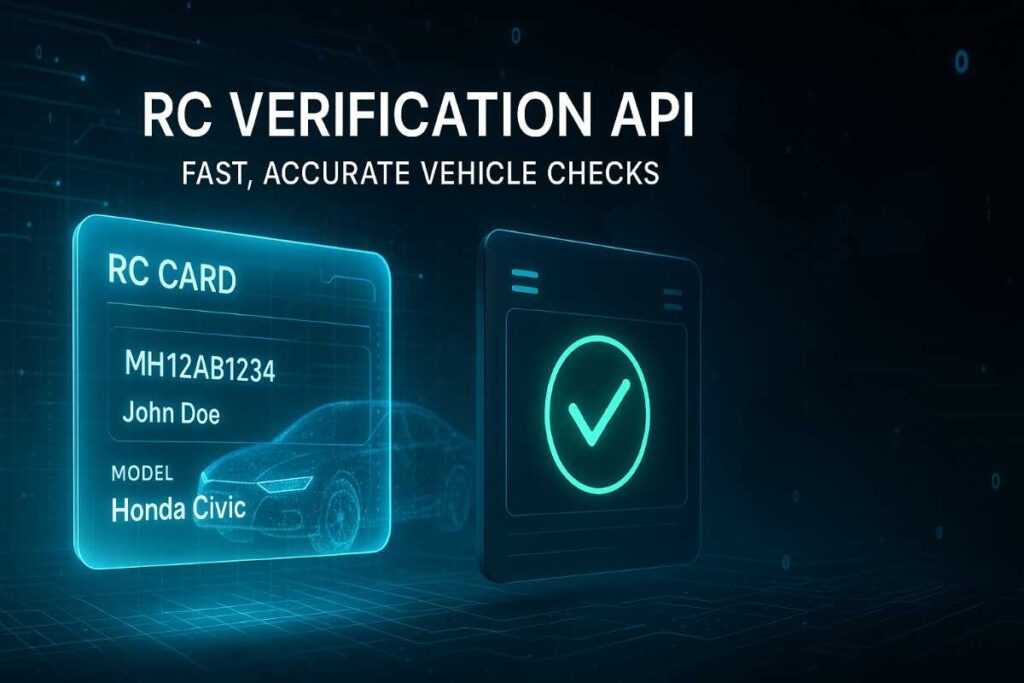

Fleet and logistics companies manage vehicles at scale. From onboarding new vehicles to ensuring compliance and smooth operations, accurate vehicle data is essential. Any mismatch in registration details can cause delays, legal issues, or operational risks. This is why RC Verification API has become a critical tool for fleet and logistics companies.
By verifying vehicle Registration Certificate details in real time, logistics platforms can maintain reliable records and operate with greater confidence.
Why Vehicle Verification Is Critical in Fleet & Logistics Operations
Fleet businesses onboard vehicles from multiple sources such as individual owners, transporters, and small fleet operators. Manual verification of RC documents is slow and often inconsistent.
Without proper verification, companies risk onboarding unauthorized vehicles, facing compliance gaps, or dealing with disputes during audits. RC verification API helps validate vehicle details at the earliest stage.
What RC Verification API Means for Logistics Platforms
RC verification API allows platforms to fetch verified vehicle registration details using the vehicle number. The API returns structured data related to registration status, ownership, vehicle class, and other key attributes.
This ensures that the vehicle being onboarded or operated is legally registered and suitable for logistics use.
How RC Verification API Works
The API processes a vehicle registration number and validates it against verified records. It returns essential RC details in a standardized format that can be integrated into fleet management systems.
This automated verification removes dependency on physical documents and reduces manual follow-ups.
Faster Vehicle Onboarding at Scale
Fleet and logistics companies often face onboarding bottlenecks due to document verification delays. RC verification API enables instant validation, allowing vehicles to be approved faster.
Faster onboarding helps platforms expand capacity quickly without compromising verification standards.
Improving Data Accuracy Across Fleet Systems
Accurate vehicle data is essential for dispatching, billing, compliance, and reporting. RC verification API ensures that vehicle records remain consistent across all internal systems.
Clean and verified data reduces downstream errors and improves overall operational efficiency.
Supporting Compliance and Regulatory Requirements
Logistics companies must comply with transport regulations and contractual obligations. RC verification API helps ensure that only valid and registered vehicles are part of active operations.
Verified records simplify audits and reduce the risk of penalties or service disruptions.
Strengthening Fraud Prevention and Risk Control
Fraud in logistics often involves fake RC documents or misrepresented vehicle details. RC verification API helps detect inconsistencies early.
By validating RC data directly from verified sources, companies can flag risky vehicles before they impact operations.
Enabling Better Driver and Vehicle Mapping
Fleet operations depend on accurate mapping between drivers and vehicles. RC verification ensures that vehicles assigned to drivers are properly verified.
This improves accountability and helps resolve disputes faster when issues arise.
Reducing Manual Effort and Operational Costs
Manual RC checks require significant staff time. RC verification API automates this process and reduces operational overhead.
Automation allows fleet companies to scale operations without increasing verification teams or support costs.
Use Cases Across Fleet & Logistics Companies
Last-mile delivery platforms use RC verification to onboard two-wheelers and small commercial vehicles quickly. Long-haul logistics companies use it to verify trucks and transport vehicles before deployment.
In both cases, RC verification API ensures reliability and compliance at scale.
Future Role of RC Verification API in Logistics
As logistics platforms become more digital and data-driven, automated verification will become standard. RC verification API supports scalable, secure, and efficient fleet operations.
Companies that adopt this early gain stronger compliance, lower risk, and smoother operations.
Conclusion
RC Verification API plays a vital role in fleet and logistics companies. It enables faster vehicle onboarding, improves data accuracy, strengthens fraud prevention, and supports compliance.
For fleet and logistics businesses focused on scale, reliability, and operational efficiency, RC verification API is a foundational component of modern vehicle management.