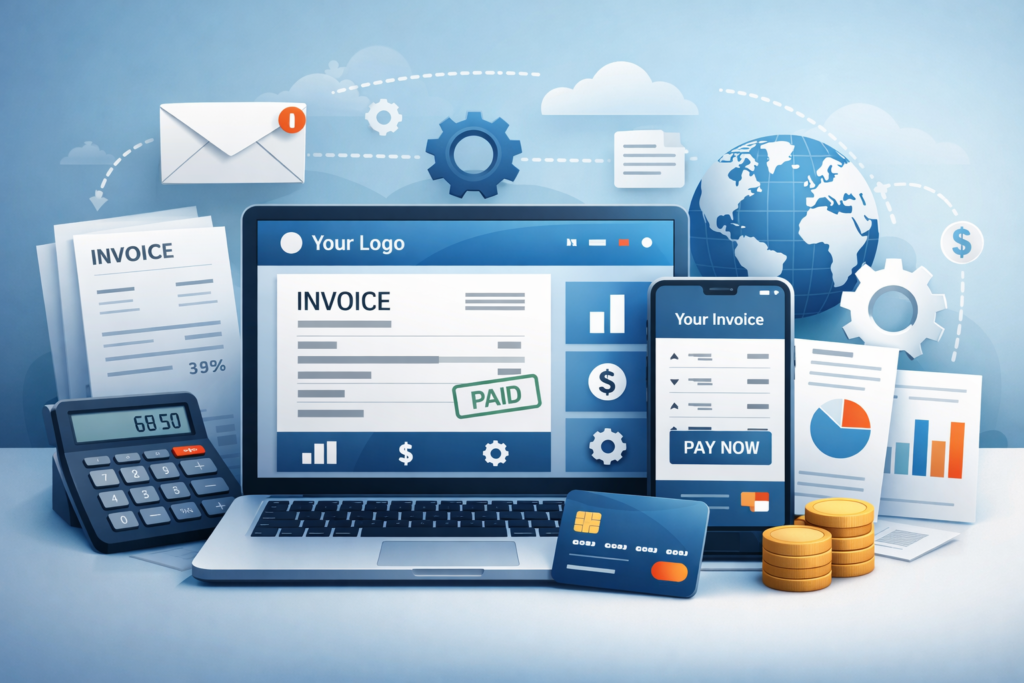

White label invoicing software is a ready-to-brand billing solution that allows businesses to offer invoicing capabilities under their own brand without building the system from scratch. It is designed for companies that want to deliver invoicing as part of their product portfolio, SaaS offerings, or internal operations while maintaining full ownership of branding, user experience, and customer relationships.
Unlike generic invoicing tools, white label invoicing software provides flexibility in customization, scalability for growth, and integration capabilities that align with diverse business models. For digital agencies, SaaS providers, fintech firms, and enterprise service companies, this approach significantly reduces development time while ensuring market-ready functionality.
What Makes White Label Invoice Processing Software Different from Standard Invoicing Tools
White Label Invoice Processing Software goes beyond basic invoice creation. It is engineered to automate, manage, and optimize the entire invoicing lifecycle—from invoice generation to payment reconciliation and reporting.
The key difference lies in ownership and control. Instead of promoting a third-party brand, businesses repackage the invoicing system as their own solution. This creates a seamless customer experience where invoicing feels like a native extension of the company’s platform rather than an external tool.
Additionally, invoice processing capabilities often include automated data extraction, tax calculations, compliance handling, multi-currency support, and integration with accounting or ERP systems. These features make the software suitable for both SMEs and large enterprises managing high invoice volumes.
Core Features of White Label Invoicing Software Explained in Detail
Custom Branding and UI Personalization
One of the most critical features is full branding control. Businesses can customize logos, color schemes, domain names, email templates, and invoice layouts. This ensures consistent brand identity across all customer touchpoints and builds long-term trust.
Automated Invoice Creation and Management
The software supports automated invoice generation based on predefined rules such as subscriptions, usage-based billing, milestones, or recurring schedules. This reduces manual effort and minimizes billing errors.
Advanced Tax and Compliance Handling
White label invoicing software often includes configurable tax engines to support GST, VAT, sales tax, and region-specific compliance requirements. Businesses operating across geographies benefit from automated tax calculations and audit-ready reports.
Multi-Currency and Multi-Language Support
For global operations, the ability to generate invoices in multiple currencies and languages is essential. This feature simplifies cross-border transactions and improves customer clarity.
Secure Payment Integrations
Most solutions integrate with multiple payment gateways, allowing customers to pay directly from invoices using cards, bank transfers, or digital wallets. Built-in security standards protect financial data and ensure compliance with industry regulations.
Real-Time Reporting and Analytics
Comprehensive dashboards provide insights into revenue, outstanding invoices, payment cycles, and customer behavior. These analytics help businesses optimize cash flow and identify operational inefficiencies.
Scalable Architecture and API Access
A robust API layer enables seamless integration with CRM systems, accounting software, ERP platforms, and other business tools. This ensures the invoicing system grows alongside the business.
Business Benefits of Using Readymade Invoicing Software
Readymade invoicing software offers a strategic advantage for companies looking to enter the billing software market or enhance their existing services without heavy investment in development.
One of the primary benefits is faster time-to-market. Businesses can deploy a fully functional invoicing solution in weeks instead of months, allowing them to capitalize on market opportunities quickly.
Cost efficiency is another major advantage. Development, maintenance, security updates, and compliance management are handled within the solution, significantly reducing operational overhead.
Scalability ensures that as transaction volumes grow, the system continues to perform efficiently. This is particularly valuable for SaaS providers and enterprises experiencing rapid expansion.
Finally, ownership of customer data and branding strengthens customer relationships and opens new revenue streams through subscription plans, add-on services, or bundled offerings.
Industry-Specific Use Cases of White Label Invoicing Software
SaaS and Subscription-Based Businesses
SaaS companies use white label invoicing software to manage recurring billing, upgrades, downgrades, and usage-based charges. It becomes a core component of their monetization strategy while maintaining brand continuity.
Accounting and Financial Service Providers
Accounting firms and financial consultants leverage invoicing software to offer value-added services to clients. It helps them streamline billing operations while presenting a professional, branded interface.
Digital Agencies and IT Service Companies
Agencies managing multiple clients benefit from centralized invoicing, project-based billing, and automated reminders. This improves cash flow and reduces administrative workload.
E-commerce and Marketplace Platforms
Marketplaces use invoicing solutions to handle multi-vendor billing, commission calculations, and customer payments. White labeling ensures the platform retains brand ownership across all transactions.
Enterprises and B2B Service Providers
Large organizations adopt invoicing software to standardize billing processes across departments, ensure compliance, and gain visibility into financial performance.
How to Choose the Right White Label Invoicing Software for Your Business
Selecting the right solution requires evaluating customization depth, scalability, compliance support, and integration capabilities. Businesses should assess whether the software aligns with their target market, transaction volume, and long-term growth strategy.
Security standards, data ownership policies, and vendor support are equally important. A reliable provider should offer regular updates, technical assistance, and flexibility to adapt the solution as business needs evolve.
Implementation Considerations and Deployment Strategy
Successful implementation involves aligning the invoicing system with existing workflows. This includes configuring invoice templates, integrating payment gateways, setting tax rules, and training internal teams.
A phased rollout approach helps minimize disruption and allows businesses to test performance, gather feedback, and optimize features before full-scale deployment.
Conclusion
White label invoicing software offers a powerful way for businesses to deliver branded, scalable, and efficient billing solutions without the complexity of in-house development. By leveraging White Label Invoice Processing Software and Readymade invoicing software, companies can improve operational efficiency, enhance customer experience, and unlock new revenue opportunities. As invoicing becomes more automated and data-driven, adopting a flexible white label solution positions businesses for long-term growth and competitiveness.
Frequently Asked Questions
What is white label invoicing software used for?
White label invoicing software is used to create, manage, and process invoices under a company’s own brand. It is commonly adopted by SaaS providers, agencies, and enterprises to streamline billing and offer invoicing as part of their services.
How is White Label Invoice Processing Software different from standard billing tools?
White Label Invoice Processing Software focuses on automation, scalability, and full brand ownership. Unlike standard tools, it allows businesses to customize the interface and integrate deeply with their existing systems.
Is readymade invoicing software suitable for large enterprises?
Yes, readymade invoicing software is designed to scale. With proper customization and integration, it can handle high transaction volumes and complex compliance requirements.
Can white label invoicing software support multiple payment methods?
Most solutions support multiple payment gateways and methods, enabling customers to pay invoices securely and conveniently.
How long does it take to deploy a white label invoicing solution?
Deployment timelines vary, but many businesses can launch a fully branded invoicing system within a few weeks, depending on customization and integration needs.