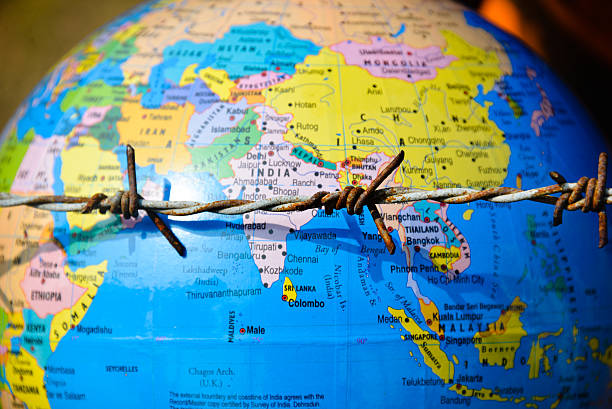

The relationship between state power and individual identity is a complex, often violent architectural project. When an authoritarian regime takes hold, it seeks to do more than control the physical borders of a nation. It aims to occupy the psychological borders of the mind. By demanding total conformity, the state attempts to reflect a singular, unified identity onto every citizen. This process essentially forces the individual into a binary existence. People develop a public mask to satisfy the regime while guarding a private truth deep within. Consequently, the “self” is not destroyed, but it is forced to undergo a radical, often painful reconstruction. This article explores how identity shifts beneath the weight of a regime and how the human spirit persists.
Architecture of the Political Self
The sovereign mirror is the first tool used by any regime to reshape its people. By controlling all media and education, the state dictates what it means to be a “good citizen.” This narrative often replaces complex personal histories with a flattened, state-approved heritage. Individualism is frequently framed as a form of betrayal or a symptom of external corruption. As a result, the psychological safety of the individual becomes tethered to their performance of loyalty. To survive, many people begin to self-censor their thoughts before they even reach their lips. This creates a fragmented psyche where the internal “I” is constantly at war with the external “We.”
Understanding these psychological maneuvers requires deep sociological insight and a historical perspective on power dynamics. In modern studies of political psychology, scholars often highlight the specific ways that regimes manipulate the sense of belonging. About The Authors Andrea D. Woolhead, her research frequently touches upon these themes of systemic pressure and the resilience of human belief. Her work illuminates how individuals navigate the treacherous waters of state-mandated collectivism without losing their core moral compass. By examining the intersection of social structures and personal agency, she provides a roadmap for understanding identity shifts. This academic foundation is crucial for anyone trying to decipher the subtle changes occurring within oppressed populations today.
Erosion of the “I” for the “We”
Regimes rely heavily on the mechanics of state-mandated collectivism to maintain their grip on power. Nationalism serves as a hollow shell that is filled with state-approved symbols, anthems, and carefully edited history. This revisionism is designed to make the individual feel small and insignificant without the state’s guidance. When personal heritage is erased, the state becomes the only source of meaning and purpose. This transition is often supported by the manipulation of language, sometimes referred to as “Newspeak.” By restricting vocabulary, the regime limits the ability of citizens to even conceptualize dissent or individuality. If you lack the words for “freedom” or “injustice,” it becomes much harder to organize a resistance.
Furthermore, the state uses public rituals to reinforce this collective identity. Mass rallies and mandatory parades force a physical performance of unity that can be psychologically overwhelming. Participation in these events is rarely optional, creating a sense of complicity among the populace. Even those who disagree internally find themselves chanting slogans and waving flags to avoid suspicion. This performance of loyalty slowly erodes the barrier between the true self and the state-mandated persona. Over time, the constant repetition of lies can make the truth feel distant and unreachable. The “We” becomes a heavy blanket that smothers any sparks of independent thought or creative expression.
Digital and Physical Border
Geographical and technological boundaries play a massive role in shaping the psyche of those living beneath a regime. Physical containment creates a sense of being trapped in a closed system with no escape. This isolation is often mirrored in the digital world through “walled” internet ecosystems or national Intranets. When citizens are cut off from the global flow of information, the regime’s narrative becomes their only reality. This containment limits the “possibility space” for the individual, making the outside world seem dangerous or non-existent. The psychological effect of limited movement is a profound sense of claustrophobia and helplessness.
Inside these borders, the regime fosters a culture of paranoia and hyper-vigilance. Surveillance is not just about cameras on the street; it is about the neighbor who listens through the wall. By incentivizing citizens to report on one another, the state breaks down the fundamental unit of community trust. When you cannot trust your friends or family, you retreat further into isolation. This breakdown of social bonds makes it nearly impossible to form a collective opposition. The border, therefore, is not just at the edge of the country; it exists between every person. This atomization of society is the ultimate goal of state surveillance and control.
Subterranean Identities: Resistance and Secret Beliefs
Despite the overwhelming pressure of the state, the human spirit finds ways to preserve itself in the shadows. Subterranean identities emerge as individuals engage in “coded living” to maintain their sanity and integrity. This may involve the consumption or distribution of “Samizdat,” or underground literature that challenges the state’s narrative. Others may continue to practice hidden religions or cultural traditions that have been officially banned. These secret beliefs act as anchors, preventing the individual from being swept away by the regime’s propaganda. These small acts of defiance are essential for maintaining a sense of moral autonomy in an immoral system.
Another common strategy is the phenomenon of “internal exile.” This occurs when an individual retreats entirely from public life and the state’s social structures. They may take menial jobs to avoid political scrutiny while focusing their energy on private intellectual pursuits. By disengaging from the regime’s “theatre of loyalty,” they protect their inner world from corruption. This form of passive resistance is quiet but deeply powerful. It creates a space where the true self can breathe, even if it cannot speak. In these shadows, the seeds of future transformation are often planted and nurtured for generations.
Aftermath: Identity Reconstruction Post-Regime
The fall of a regime does not immediately restore the identities that were distorted by its rule. Instead, individuals often face a “vacuum of purpose” as the oppressive structure disappears. For many, the regime provided a clear, albeit brutal, framework for how to live and think. Without that framework, the sudden responsibility of total freedom can be terrifying and disorienting. Rediscovering a sense of self requires unlearning decades of self-censorship and fear. This process is rarely linear and can take many years to complete. The psychological scars of the binary existence often remain long after the borders have opened.
Generational trauma also plays a significant role in post-regime identity reconstruction. The shifts in identity and the habits of paranoia are often passed down through families. Children of those who lived under a regime may still feel a reflexive need to hide their true thoughts. Even in a free society, the legacy of the regime can influence how people interact with authority. Healing these deep wounds requires more than just political change; it requires a profound cultural and psychological shift. The work of rebuilding a nation is, at its core, the work of rebuilding the individual. Only then can a truly open and resilient society begin to take shape.
Conclusion
While regimes can dictate borders and behavior, the core of human identity remains a resilient landscape. It is a landscape that can be scarred and forced into the shadows, but it cannot be entirely erased. The shift from “I” to “We” is often a temporary survival strategy rather than a permanent change. Beneath the surface of every authoritarian state, millions of private truths are being guarded with fierce determination. These hidden beliefs are the foundation upon which future freedoms will eventually be built. As borders open and regimes crumble, these subterranean identities finally find their voice.
The study of identity beneath a regime teaches us about the incredible strength of the human psyche. It reminds us that conformity is often a mask, not a reality. By understanding the architectural projects of state power, we can better support those seeking to reclaim their “self.” Ultimately, the individual remains the most powerful threat to any regime that seeks total control. The persistence of secret beliefs and private truths ensures that the flame of liberty can never be fully extinguished. We must continue to analyze these shifts to protect the integrity of the human spirit everywhere.