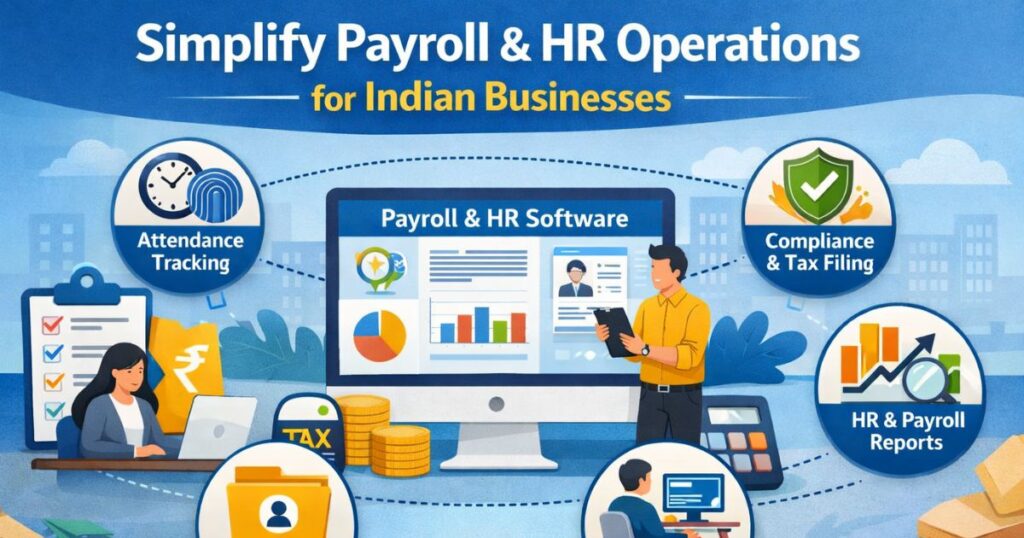

Managing payroll and HR operations has become more complex for Indian businesses as workforces grow, regulations change, and employee expectations rise. From salary calculations and statutory compliance to attendance tracking and employee records, manual processes often lead to errors, delays, and unnecessary stress. This is why many organizations are now turning to Best Payroll Software India solutions early in their digital journey to bring structure, accuracy, and efficiency to core HR functions. Simplifying these processes is no longer optional—it is essential for sustainable growth.
The Growing Complexity of Payroll and HR in India
Indian businesses operate in a highly regulated environment. Payroll teams must handle PF, ESI, professional tax, income tax deductions, gratuity, and leave encashment, all while ensuring compliance with central and state laws. On the HR side, maintaining employee data, managing onboarding, tracking attendance, and handling performance records can quickly become overwhelming when done manually.
As organizations expand across cities or states, these challenges multiply. Different working hours, shifts, and holidays add more layers of complexity, making traditional spreadsheets and paper-based systems inefficient and risky.
Why Manual Processes Hold Businesses Back
Many small and mid-sized companies still rely on manual payroll calculations and disconnected HR tools. While this may seem cost-effective initially, it often results in:
- Payroll errors that affect employee trust
- Delayed salary processing
- Difficulty in generating compliance-ready reports
- Limited visibility into workforce data
- Higher dependency on specific individuals for critical tasks
These issues not only waste time but also distract leadership from focusing on growth and strategy.
The Role of Digital HR and Payroll Systems
Technology plays a crucial role in simplifying payroll and HR operations. Modern digital systems integrate multiple HR functions into a single platform, reducing duplication of work and improving data accuracy. Automated calculations, real-time updates, and centralized data storage help businesses maintain consistency across departments.
With cloud-based access, HR teams can manage operations from anywhere, making it easier to support remote or hybrid work models that are increasingly common in India.
Automating Payroll for Accuracy and Compliance
One of the biggest advantages of payroll software is automation. Salary calculations, deductions, bonuses, and arrears can be processed automatically based on predefined rules. This minimizes human error and ensures employees are paid accurately and on time.
Automation also supports compliance by keeping payroll aligned with the latest statutory updates. Reports for audits, tax filings, and government submissions can be generated instantly, reducing last-minute pressure and compliance risks.
Streamlining HR Processes with a Centralized System
HR operations extend beyond payroll. Employee onboarding, document management, leave tracking, and performance records are all interconnected. A centralized HR system brings these elements together, allowing HR teams to manage the employee lifecycle efficiently.
Using the Best HR Software in India enables organizations to maintain a single source of truth for employee data. This not only improves internal efficiency but also enhances transparency and communication between HR, management, and employees.
Simplifying Attendance and Leave Management
Attendance tracking is closely linked to payroll accuracy. Manual attendance registers or disconnected systems often lead to mismatches between working hours and salary calculations. Digital attendance solutions eliminate this issue by capturing real-time data through biometric devices, mobile apps, or web portals.
With Attendance Software in India, businesses can automatically sync attendance data with payroll, ensuring accurate wage calculations. Employees can view their attendance and leave balances, while managers gain better visibility into workforce availability and productivity.
Improving Employee Experience Through Self-Service
Simplifying payroll and HR is not just about operational efficiency; it also impacts employee satisfaction. Self-service portals allow employees to access payslips, apply for leave, update personal details, and download documents without relying on HR for every request.
This reduces HR workload while empowering employees with transparency and control over their information. A better employee experience often leads to higher engagement and lower attrition.
Gaining Insights with HR Analytics
Digital HR and payroll systems provide valuable insights through dashboards and reports. Businesses can analyze trends such as attendance patterns, overtime costs, attrition rates, and payroll expenses. These insights help leadership make informed decisions about workforce planning and cost optimization.
Instead of reacting to issues after they arise, organizations can use data to anticipate challenges and take proactive steps.
Choosing the Right Approach for Your Business
Simplifying payroll and HR operations requires a clear understanding of business needs. Factors such as company size, industry, workforce distribution, and compliance requirements should guide technology adoption. Scalability is also important, as systems should support future growth without frequent changes.
Training HR teams and employees to use new systems effectively ensures maximum return on investment and smoother adoption.
Conclusion: A Smarter Way Forward
For Indian businesses, simplifying payroll and HR operations is about creating a balance between compliance, efficiency, and employee satisfaction. By moving away from manual processes and embracing integrated digital solutions, organizations can reduce errors, save time, and gain better control over their workforce.
In a competitive business environment, streamlined HR and payroll processes free up valuable resources, allowing companies to focus on innovation, growth, and building a strong organizational culture.
