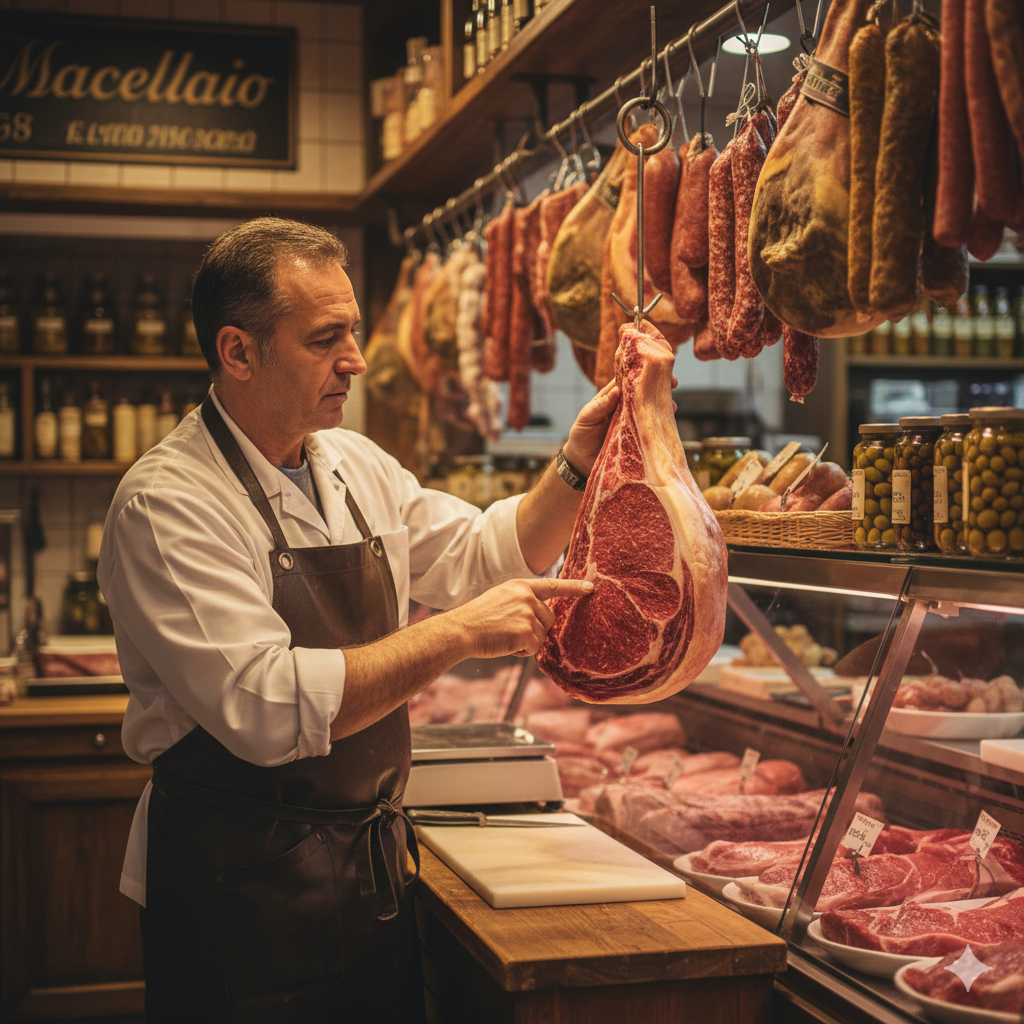

Italian butchery is equal parts craft, culture, and quiet obsession. Selecting the finest carne is not a single decision but a chain of expert judgments made long before a cut reaches the counter. Below, I break down how Italian butchers do it drawing on traditional practice and my own hands-on experience working alongside master macellai in Emilia-Romagna and Tuscany.
What Does “Finest Carne” Mean to an Italian Butcher?
It means meat that is balanced in flavor, texture, and provenance, not simply tender or expensive.
Italian butchers define “finest” as meat that respects the animal, the land, and the dish it’s destined for.
From an expert standpoint, this definition is practical. A bistecca for grilling needs different qualities than beef for ragù. The finest carne is context-driven, and experienced butchers judge quality based on purpose as much as purity.
How Do Italian Butchers Choose the Right Breed?
They prioritize traditional breeds that match regional cooking styles.
Breed selection comes first because genetics define fat distribution, muscle density, and flavor potential.
For example, Chianina cattle are chosen for bistecca alla fiorentina because of their lean muscle and mineral depth, while Romagnola beef offers balance for slow braises. In my experience, skilled butchers can identify breed traits visually before paperwork ever comes out.
Why Is the Animal’s Diet So Important?
Because flavor starts with what the animal eats, not how it’s cooked.
Grass quality, seasonal forage, and natural feed directly influence fat aroma and meat sweetness.
Italian butchers often work with farmers they’ve known for decades. I’ve watched masters reject entire sides of beef because the fat smelled “flat,” a sign of poor or rushed feeding. This sensory evaluation trained over years is a key marker of expertise.
How Does Age and Maturity Affect Meat Quality?
Proper maturity ensures flavor development without toughness.
Italian butchers look for animals slaughtered at an age that suits the intended cut and preparation.
Younger animals yield delicate textures, while mature cattle develop deeper umami. Through experience, butchers assess maturity by muscle firmness, bone color, and fat density. These are not textbook checks; they are skills honed through repetition and mentorship.
What Role Does Dry Aging Play in Selecting Carne?
Dry aging concentrates flavor and improves tenderness when done with precision.
Butchers select only meat with the right fat cover and structure for aging.
In professional practice, not every carcass qualifies. I’ve personally monitored aging rooms where humidity, airflow, and time are adjusted weekly. Italian butchers don’t age meat to follow trends they age to serve a specific culinary result.
How Do Italian Butchers Evaluate Meat with Their Senses?
They rely on sight, smell, and touch before any instrument.
Color consistency, fat sheen, and aroma provide immediate quality signals.
Pressing the meat reveals elasticity; a clean, milky scent indicates healthy fat. These evaluations are rooted in experience. A seasoned butcher can detect stress in an animal simply by examining muscle fibers something no label can show.
Why Is Regional Knowledge Essential to Meat Selection?
Because Italian cooking is regional, and meat must match tradition.
Butchers choose cuts based on how local chefs and families cook them.
A cut perfect in Bologna may be unsuitable in Naples. This is why many diners seeking authenticity whether at a neighborhood trattoria or a covent garden italian restaurant , affordable italian restaurants london taste the difference when meat is selected with regional understanding rather than generic standards.
How Do Experience and Expertise Shape Final Selection?
Years of repetition refine instinct into precision.
Expert butchers combine tradition, sensory training, and accountability to make final calls.
After decades in the trade, I’ve learned that the finest carne is chosen as much by confidence as by caution. Italian butchers stand behind every cut they sell. That responsibility sharpens judgment and that judgment is what ultimately defines excellence.
Final Thoughts
Italian butchers don’t chase perfection; they practice it daily. Through breed knowledge, sensory mastery, regional awareness, and lived experience, they select meat that honors both animal and table. The finest carne isn’t accidental it’s the result of expertise passed down, cut by cut.