
How to Patch a Hole in the Roof: Step-by-Step Guide for Lasting Repairs
How to Patch a Hole in the Roof is something most homeowners only search after panic sets in.
I’ve been called out to roofs at 6 a.m., rain pouring through ceilings, buckets already overflowing. Almost every time, the damage started small.
A nail pop. A cracked shingle. A careless satellite install.
Understanding Why Roof Holes Happen
A hole in roof repair usually begins with understanding how it got there.
Storm debris, rusted flashing, foot traffic, and poor previous repairs are common culprits.
I’ve even seen squirrels chew straight through soft decking.
Knowing the cause helps decide whether you’re dealing with a temporary patch or a long-term fix.
Safety Comes First, Always
Before you patch hole in roof surfaces, protect yourself.
I’ve slipped once on a damp pitch and learned fast—good boots and a harness aren’t optional.
If the roof feels unstable or the hole is large, don’t push it.
Sometimes the smartest repair is knowing when to step back.
Tools and Materials You’ll Actually Need
For most roof hole repair jobs, keep it simple.
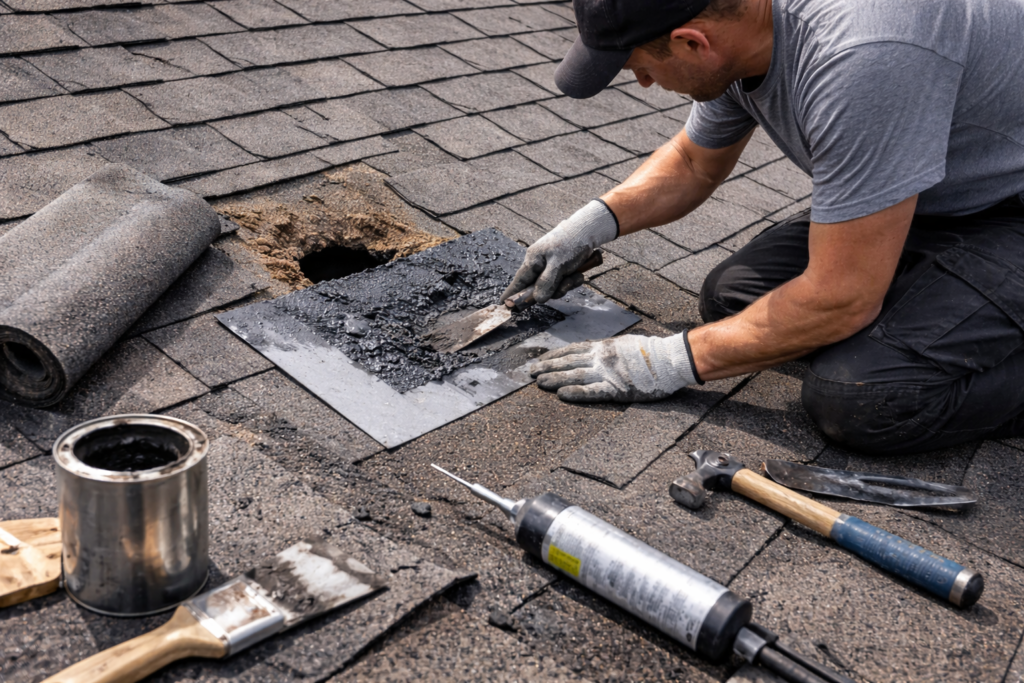
You’ll need roofing cement, flashing, a putty knife, replacement shingles, and roofing nails.
For flat roofs, a patch membrane and adhesive work best.
I always carry extra sealant because you’ll use more than you think.
Step 1: Locate the Exact Damage
Finding the hole is harder than it sounds.
Water travels, and interior stains rarely sit directly below the damage.
I trace moisture lines in the attic before touching the roof.
That step alone saves hours and prevents guesswork.
Step 2: Clean and Prep the Area
Never repair hole in roof surfaces without cleaning first.
Remove debris, loose material, and old sealant.
I once skipped this step on a rush job, and the patch failed within months.
Clean surfaces bond better. Always.
Step 3: How to Patch a Hole in the Roof (Shingle Roof)
For asphalt shingles, lift the surrounding shingles carefully.
Slide flashing beneath the hole, covering it completely.
Apply roofing cement generously, then secure the shingle back in place.
This is the most reliable way to patch a hole in the roof without full replacement.
Step 4: Repair Small Hole in Roof on Flat Surfaces
Flat roofs require a different approach.
Cut a patch at least two inches larger than the hole on all sides.
Apply adhesive evenly, press firmly, and seal edges thoroughly.
I always roll the patch to eliminate trapped air.
Step 5: Roof Hole Repair from Inside (When Exterior Access Isn’t Possible)
Sometimes weather or access makes exterior work impossible.
Repair hole in roof from inside is temporary but useful.
Use expanding foam or roofing sealant to stop water flow.
I tell clients this buys time, not peace of mind.
Step 6: Seal and Waterproof Thoroughly
This step separates lasting repairs from callbacks.
After patching, seal all edges with roofing cement.
Water doesn’t attack the patch—it sneaks around it.
I double-seal corners every time, without exception.
Step 7: Inspect the Surrounding Area
One hole rarely travels alone.
Check nearby shingles, flashing, and vents.
I’ve fixed one obvious hole only to find three more waiting.
Roof hole repair should always be holistic.
Case Study: A “Small” Hole That Wasn’t
A homeowner once called me for a repair small hole in roof above a bathroom.
The visible hole was tiny.
Underneath, rot had spread across four joists.
Because we caught it early, repairs stayed affordable.
Delay would’ve doubled the cost.
Temporary vs Permanent Roof Hole Repair
Not all patches are equal.
Emergency fixes stop water today.
Permanent repairs prevent tomorrow’s problems.
I always explain both options so clients can choose wisely.
Common Mistakes I See All the Time
Using caulk instead of roofing cement tops the list.
Ignoring underlying rot is another big one.
And patching without flashing almost always fails.
How to fix hole in roof jobs go wrong when shortcuts replace process.
When to Call a Professional
If the hole exceeds a few inches, call for help.
Structural damage isn’t DIY territory.
I’ve repaired roofs where homeowners unintentionally made things worse.
There’s no shame in protecting your home properly.
Maintenance Tips to Prevent Future Holes
Inspect your roof twice a year.
Clear debris, check flashing, and replace damaged shingles early.
Small fixes prevent emergency calls.
That’s the quiet secret of long-lasting roofs.