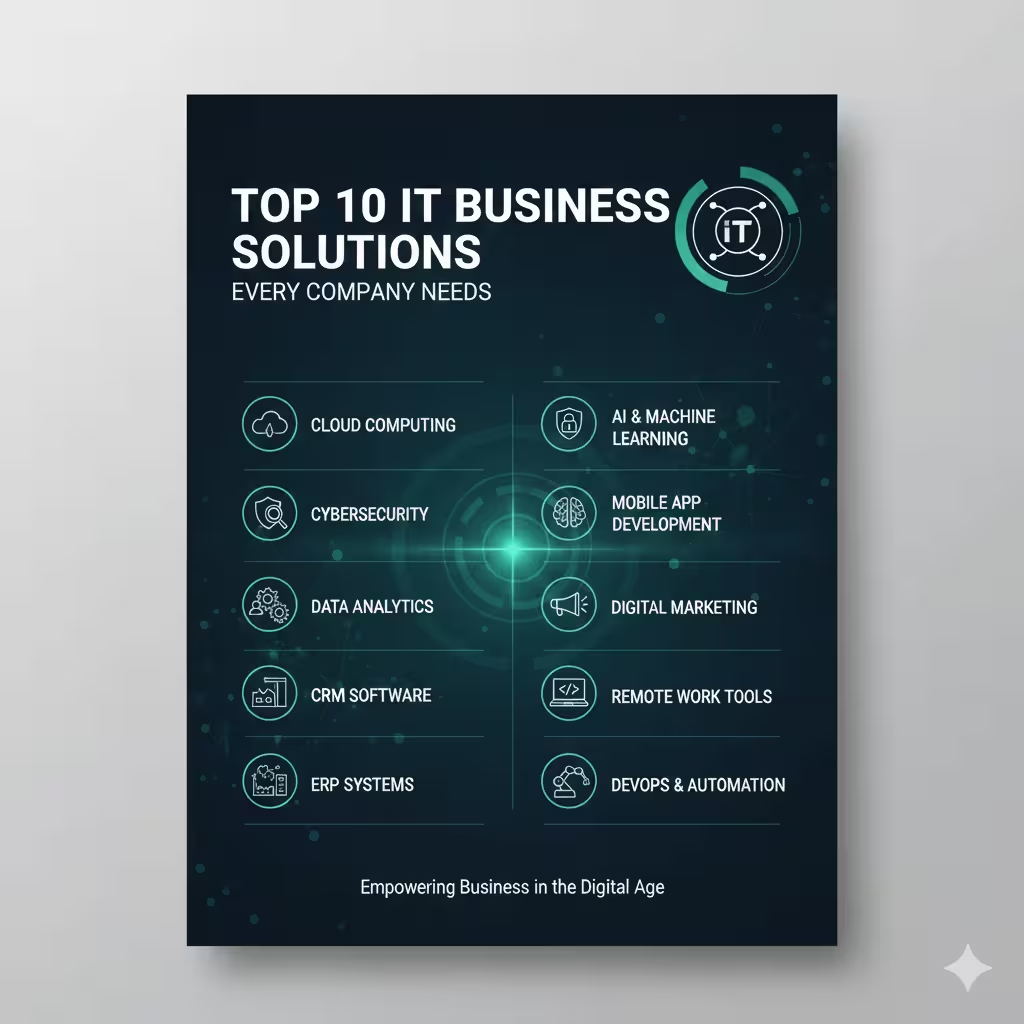

The contemporary business landscape demands more than traditional operational frameworks—it requires sophisticated technological infrastructure that drives efficiency, security, and scalability. Organizations across industries are recognizing that robust IT Business Solutions aren’t merely supplementary tools but fundamental pillars that support sustainable growth and competitive advantage.
The digital transformation journey presents unique challenges for enterprises navigating an increasingly complex technological ecosystem. Whether you’re steering a startup through its formative stages or optimizing an established corporation’s operations, understanding which IT Business Solutions deliver tangible value becomes paramount. This comprehensive analysis explores 10 mission-critical solutions that distinguish thriving organizations from merely surviving organizations in today’s hyperconnected marketplace.
Cloud Computing Infrastructure
The migration from legacy on-premises systems to cloud-based architectures represents one of the most transformative shifts in modern enterprise operations. Cloud computing delivers unparalleled flexibility, enabling organizations to scale resources dynamically in response to fluctuating demand without substantial capital expenditure on physical hardware.
Key advantages include:
- Reduced operational overhead through pay-as-you-grow pricing models
- Enhanced disaster recovery capabilities with geographically distributed data centres
- Seamless collaboration across dispersed teams and remote workforces
- Automatic software updates eliminate manual maintenance burdens
Forward-thinking IT Business Solutions companies consistently emphasize cloud adoption as the cornerstone of their digital transformation strategies, recognizing its role in accelerating innovation cycles and improving operational agility.
Cybersecurity Frameworks
The exponential increase in sophisticated cyber threats demands comprehensive security architectures that extend beyond basic antivirus software. Modern cybersecurity solutions employ multi-layered defence mechanisms that incorporate endpoint protection, network monitoring, intrusion detection systems, and behavioural analytics to identify anomalies before they escalate into breaches.
Organizations must implement zero-trust security models that verify every access request, regardless of origin. This approach significantly reduces vulnerability surfaces while maintaining operational efficiency. Regular security audits, penetration testing, and employee awareness programs complement technological defences, creating holistic protection against evolving threat landscapes.
Enterprise Resource Planning Systems
Integrated ERP platforms revolutionize how organizations manage core business processes by consolidating disparate functions into a single system. These comprehensive IT Business Solutions synchronize finance, human resources, supply chain management, customer relations, and inventory control across centralized databases, eliminating information silos.
The real-time visibility provided by contemporary ERP systems empowers leadership teams to make data-driven decisions with confidence. Automated workflows reduce manual intervention, minimize human error, and accelerate transaction processing. Organizations implementing robust ERP infrastructure typically experience measurable improvements in operational efficiency and resource allocation within the first year of deployment.
Data Analytics and Business Intelligence
Raw data has little value until it is transformed into actionable intelligence through sophisticated analytical frameworks. Advanced business intelligence platforms aggregate information from multiple sources, applying machine learning algorithms and statistical models to uncover patterns, trends, and correlations that inform strategic planning.
Predictive analytics capabilities enable organizations to anticipate market shifts, customer behaviour, and operational bottlenecks before they materialize. Interactive dashboards and visualization tools democratize data access across organizational hierarchies, ensuring that stakeholders at every level can leverage insights relevant to their functions.
Communication and Collaboration Platforms
The proliferation of remote and hybrid work models necessitates a robust communication infrastructure that transcends geographical boundaries. Unified collaboration platforms integrate video conferencing, instant messaging, File sharing, and project management tools within cohesive ecosystems that streamline teamwork.
These solutions facilitate asynchronous collaboration across time zones while maintaining conversation continuity and project momentum. Integration with other business applications creates seamless workflows, enabling information to flow naturally between communication channels and operational systems, reducing context switching and enhancing productivity.
Customer Relationship Management Systems
Exceptional customer experiences originate from a deep understanding of client needs, preferences, and interaction histories. Sophisticated CRM platforms centralize customer data, tracking every touchpoint across marketing, sales, and support functions to create comprehensive customer profiles.
Strategic CRM implementation delivers:
- Personalized engagement strategies based on behavioural patterns
- Automated lead nurturing sequences that maintain consistent communication
- Performance metrics illuminating conversion bottlenecks and optimization opportunities
- Predictive scoring models identifying high-value prospects warranting prioritized attention
Organizations partnering with experienced IT Business Solutions companies leverage CRM systems not merely as contact databases but as strategic assets that drive revenue growth and customer retention.
Backup and Disaster Recovery Solutions
Business continuity planning demands robust mechanisms ensuring critical data and systems remain accessible despite unexpected disruptions. Comprehensive backup strategies employ the 3-2-1 approach: maintaining three copies of data across two different media types, with one copy stored off-site.
Modern disaster recovery solutions extend beyond simple data backup, incorporating automated failover systems that redirect traffic to secondary infrastructure when primary systems fail. Regular testing validates recovery procedures, ensuring organizations can restore operations within acceptable timeframes that minimize revenue loss and reputational damage.
Network Infrastructure Management
The foundation supporting all digital operations rests upon reliable, high-performance network architecture. Professional network management encompasses hardware optimization, bandwidth allocation, traffic monitoring, and performance troubleshooting to maintain consistent connectivity and response times.
Software-defined networking technologies enable dynamic resource allocation that adapts to changing demands in real time. Network segmentation enhances security by isolating sensitive data while quality-of-service configurations prioritize mission-critical applications over less time-sensitive traffic.
Mobile Device Management
The ubiquity of smartphones and tablets in professional environments introduces both opportunities and security challenges. Comprehensive mobile device management platforms enable IT administrators to enforce security policies, deploy applications remotely, and wipe data from lost or stolen devices without disrupting legitimate users.
Containerization technologies separate personal and professional data on employee-owned devices, protecting corporate information while respecting privacy. Conditional access policies restrict access to sensitive data based on device compliance status, location, and security posture.
IT Support and Help Desk Services
Even the most sophisticated IT Business Solutions require ongoing maintenance, troubleshooting, and user support. Professional help desk services offer tiered support structures that efficiently resolve issues and escalate complex problems to specialized technicians when necessary.
Adequate IT support encompasses:
- 24/7 availability, ensuring critical issues receive immediate attention
- Knowledge base systems empowering users through self-service resources
- Ticketing platforms track issue resolution and identify recurring problems
- Proactive monitoring detects potential failures before users experience disruptions
Organizations that invest in comprehensive support infrastructure minimize downtime costs while maximizing technology adoption across their workforce.
Strategic Implementation Considerations
Selecting appropriate IT Business Solutions requires a thorough assessment of organizational requirements, existing infrastructure, budget constraints, and growth projections. Partnering with experienced consultants ensures implementations align with business objectives rather than simply deploying trendy technologies without a strategic purpose.
Successful digital transformation initiatives prioritize user adoption through comprehensive training programs and change management strategies. Technology investments deliver returns only when employees embrace new systems and integrate them effectively into daily workflows.
The evolving technological landscape demands continuous evaluation and optimization of the IT infrastructure. Organizations treating technology as strategic enablers rather than cost centres position themselves advantageously against competitors who still view IT as purely operational overhead. These ten foundational solutions create resilient, efficient, and innovative organizations prepared to capitalize on emerging opportunities while navigating the inevitable challenges of modern business environments.